rejectsynth
A programming language for composing music inside of a code editor, using a notation focusing on music theory. You can hear notes as you type them in, or select a passage to hear it played back.
I couldn't beat this really hard solitaire game, so I wrote a solver using the A* algorithm and wrote an auto-player using computer vision and mouse automation.
A minimal functioning webserver that has no dependencies besides the Rust language and Linux itself.
A learning exercise for exploring Linux syscalls and no_std + unsafe Rust. All of the networking and IO are implemented directly as syscalls using inline x86_64 assembly.
#![feature(lang_items)]
#![feature(maybe_uninit_uninit_array)]
#![no_std]
#![no_main]
// Rust standard library
// (Vec, String, Everything you
// would want to use...)
//
// |-> no_std (Our project right now)
// | -> Kernel
// | (directly through Syscalls)
// | (Linux)
// |
// | For a syscall, you dump
// | arguments into registers
// | You dump a syscall NUMBER
// | into the "RAX" register
// | Call the "syscall" instruction
// |
// |-> std (not using this)
// -> libc (C standard library)
// (malloc, memcpy, memset)
// |
// | communicate with the
// | operating system and with
// | the hardware
// v
// Kernel (Linux)
mod linux;
use core::::PanicInfo;
use ;
const ROOT_INDEX: &'static [u8] = b"index.htm";
// LLVM depends on these functions, so we need these or else we get linker errors
#[no_mangle]
fn memcpy(dest: *mut u8, src: *const u8, n: usize) -> *mut u8 {
for i in 0..n {
unsafe {
*dest.add(i) = *src.add(i);
}
}
dest
}
#[no_mangle]
fn memset(s: *mut u8, c: i32, n: usize) -> *mut u8 {
for i in 0..n {
unsafe {
*s.add(i) = c as u8;
}
}
s
}
fn write_num(fd: i32, mut num: usize) {
if num == 0 {
return (fd, &[b'0']);
}
const BUFFER_SIZE: usize = 10;
let mut buffer: [u8; BUFFER_SIZE] = [0u8; BUFFER_SIZE];
let mut i = BUFFER_SIZE;
while num > 0 {
if i == 0 {
panic!("overflowed buffer for content length");
} else {
i -= 1;
}
let this_digit = (num % 10) as u8;
num /= 10;
buffer[i] = this_digit + b'0';
}
(fd, &buffer[i..BUFFER_SIZE]);
}
const NOT_FOUND_MSG: &[u8] = b"<marquee>404 Page Not Found</marquee>";
fn write_http_resp_from_filename(out_fd: i32, filename: &[u8]) {
let fd = (filename);
if fd.is_none() {
(out_fd, 404, .len());
(out_fd, );
return;
}
let fd = fd.unwrap();
let stats = (fd);
(out_fd, 200, stats.st_size as _);
let mut buf: [u8; 32] = [0u8; 32];
loop {
let bytes_read = (fd, &mut buf);
if bytes_read > 0 {
(out_fd, &buf[..bytes_read as _]);
} else {
break;
}
}
(fd);
}
fn write_http_resp_header(fd: i32, code: usize, len: usize) {
(fd, br#"HTTP/1.0 "#);
(fd, code);
(
fd,
br#" OK
Content-type: text/html; charset=UTF-8
Content-Length: "#,
);
(fd, len);
(fd, b"\n\n");
}
fn extract_path_from_http_req(req: &[u8]) -> &[u8] {
let mut i = 0;
while req[i] != b' ' {
i += 1;
}
#[allow(unused)]
let request_method = &req[0..i];
// skip the next char which is a space
i += 1;
// skip the leading / in the request, because that won't map to the filesystem
if req[i] == b'/' {
i += 1;
}
let start_of_path = i;
while req[i] != b' ' && i < req.len() - 2 {
i += 1;
}
&req[start_of_path..i]
}
#[no_mangle]
fn _start() {
const PORT: u16 = 8080;
("Webserver listening on port ");
(, PORT as _);
("...\n");
let fd = ();
(fd, PORT);
(fd);
// main web request loop
loop {
let conn_fd = (fd);
// parse the request
const REQ_BUF_SIZE: usize = 1024;
let mut req_buf: [u8; REQ_BUF_SIZE] =
unsafe { core::mem::MaybeUninit::uninit().assume_init() };
let num_bytes_read = (conn_fd, &mut req_buf);
let req = &req_buf[..num_bytes_read as _];
let requested_path = (req);
(, b"Read ");
(, num_bytes_read as _);
(, b" bytes:\n");
(, &req_buf[..num_bytes_read as _]);
// end of parse the request
if requested_path.is_empty() {
(conn_fd, );
} else {
(conn_fd, requested_path);
}
("Send response to client who connected\n");
}
}
fn htons(port: u16) -> u16 {
port.to_be()
}
fn print(s: &str) {
(, s.as_bytes());
}
#[panic_handler]
fn panic(panic_info: &PanicInfo<'_>) -> ! {
// TODO: print out panic.location.file, line_number, etc.
const STDERR: i32 = 2;
(STDERR, b"\n\n\npanic! at ");
match panic_info.location() {
None => {}
Some(loc) => {
(STDERR, loc.file().as_bytes());
(STDERR, b":");
(STDERR, loc.line() as _);
(STDERR, b":");
(STDERR, loc.column() as _);
(STDERR, b"\n");
}
}
(1);
}
// linux syscalls layer
use core::arch::asm;
use core::mem::size_of;
type SocklenT = u32;
const AF_INET: i32 = 2;
pub fn read(fd: i32, buf: &mut [u8]) -> u32 {
const SYSCALL_READ: u64 = 0;
let res: i64;
unsafe {
// ssize_t read(int fd, void *buf, size_t count);
asm!(
"syscall",
inout("rax") SYSCALL_READ => res,
// argument #1
in("rdi") fd,
// argument #2
in("rsi") buf.as_ptr(),
// argument #2
in("rdx") buf.len(),
)
}
if res < 0 {
panic!("read failed");
}
res as u32
}
pub fn close(fd: i32) {
const SYSCALL_CLOSE: u64 = 3;
let res: i64;
unsafe {
// int close(int fd);
asm!(
"syscall",
inout("rax") SYSCALL_CLOSE => res,
// argument #1
in("rdi") fd,
)
}
if res < 0 {
panic!("close failed");
}
}
pub fn open(path: &[u8]) -> Option<i32> {
// converting a rust string into a c string
const BUFFER_SIZE: usize = 1024;
let mut buffer: [u8; BUFFER_SIZE] = unsafe { core::mem::MaybeUninit::uninit().assume_init() };
let path_bytes = path;
if path_bytes.len() + 1 > BUFFER_SIZE {
panic!("path is too long");
}
buffer[0..path_bytes.len()].copy_from_slice(path_bytes);
buffer[path.len()] = 0;
let fd: i32;
let filepath_cstr = &buffer as *const u8;
const SYSCALL_OPEN: i32 = 2;
const O_RDONLY: i32 = 0;
unsafe {
// int open(char *file, int omode)
asm!(
"syscall",
inout("rax") SYSCALL_OPEN => fd,
// argument #1
in("rdi") filepath_cstr,
// argument #2
in("rsi") O_RDONLY,
)
}
if fd < 0 {
None
} else {
Some(fd)
}
}
// copilot wrote this struct, we can grab the size, not sure if it's even the correct size
// so maybe fstat is like writing into garbage memory because the struct isn't big enough
#[repr(C)]
#[derive(Default)]
pub struct Stat {
st_dev: u64,
st_ino: u64,
st_nlink: u64,
st_mode: u32,
st_uid: u32,
st_gid: u32,
_pad0: u32,
st_rdev: u64,
pub st_size: i64,
st_blksize: i64,
st_blocks: i64,
st_atime: u64,
st_atime_nsec: u64,
st_mtime: u64,
st_mtime_nsec: u64,
st_ctime: u64,
st_ctime_nsec: u64,
_unused: [i64; 3],
}
// fstat => 5
pub fn fstat(fd: i32) -> {
const SYSCALL_FSTAT: i32 = 5;
let mut stat = ::default();
let mut res: i32;
unsafe {
// int fstat(int fd, struct stat *buf)
asm!(
"syscall",
inout("rax") SYSCALL_FSTAT => res,
// argument #1
in("rdi") fd,
// argument #2
in("rsi") &mut stat as *mut ,
)
}
if res < 0 {
panic!("stat failed");
}
stat
}
pub fn accept(fd: i32) -> i32 {
const SYSCALL_ACCEPT: i32 = 43;
let sockaddr_in = {
sin_family: 0,
sin_port: 0,
sin_addr: 0,
sin_zero: [0, 0, 0, 0, 0, 0, 0, 0],
};
let sockaddr_in_ptr = &sockaddr_in as *const ;
let sizeof_sockaddr_in = size_of::<>() as ;
let sizeof_sockaddr_in_ptr = &sizeof_sockaddr_in as *const ;
let mut ret;
unsafe {
asm!(
"syscall",
inout("rax") SYSCALL_ACCEPT => ret,
in("rdi") fd,
in("rsi") sockaddr_in_ptr,
in("rdx") sizeof_sockaddr_in_ptr,
);
}
ret
}
pub fn bind(fd: i32, port: u16) {
const SYSCALL_BIND: u64 = 49;
let sockaddr_in = {
sin_family: as _,
sin_port: (port),
// listen on 0.0.0.0
sin_addr: 0,
// padding
sin_zero: [0, 0, 0, 0, 0, 0, 0, 0],
};
let sockaddr_in_ptr = &sockaddr_in as *const ;
let sizeof_sockaddr_in = size_of::<>();
unsafe {
asm!(
"syscall",
in("rax") SYSCALL_BIND,
in("rdi") fd,
in("rsi") sockaddr_in_ptr,
in("rdx") sizeof_sockaddr_in,
)
}
}
pub fn listen(fd: i32) {
const SYSCALL_LISTEN: u64 = 50;
let backlog: i32 = 0;
unsafe {
asm!(
"syscall",
in("rax") SYSCALL_LISTEN,
in("rdi") fd,
in("rsi") backlog,
)
}
}
#[repr(C)]
struct SockaddrIn {
sin_family: u16,
sin_port: u16,
// to listen on all ports, zero this out
sin_addr: u32,
sin_zero: [u8; 8],
}
// returns a file descriptor
pub fn tcp_socket() -> i32 {
const SYSCALL_SOCKET: i32 = 41;
const SOCK_STREAM: i32 = 1;
const TYPE: i32 = 0; // not sure if this is right yet
let mut ret;
unsafe {
asm!(
"syscall",
inout("rax") SYSCALL_SOCKET => ret,
in("rdi") ,
in("rsi") SOCK_STREAM,
in("rdx") TYPE,
);
}
ret
}
pub fn exit(code: u8) -> ! {
const SYSCALL_EXIT: u64 = 60;
unsafe {
asm!(
"syscall",
in("rax") SYSCALL_EXIT,
in("dil") code,
options(noreturn)
)
}
}
pub fn write(fd: i32, s: &[u8]) {
const SYSCALL_WRITE: u64 = 1;
unsafe {
asm!(
"syscall",
in("rax") SYSCALL_WRITE,
// argument #1
in("rdi") fd,
// argument #2
in("rsi") s.as_ptr() as u64,
// argument #2
in("rdx") s.len() as u64,
)
}
}
pub const STDOUT: i32 = 1;
A programming language built around structural pattern matching and parsing. Patterns can capture values, run code, and compose into larger patterns.
Designed and implemented in one week, and placed as a runner-up in langjam 0002.
pat unit {
  n@num ~ 'd' => n * 1440,
  n@num ~ 'h' => n * 60,
  n@num ~ 'm' => n
}
pat minutes ns@[unit]{1+} => sum(ns)
minutes("2h15m")
135
pat bit { '0' => 0, '1' => 1 }
pat bits bs@[bit]{1+} => bs
pat dec bs@bits => sum [*bs << (#bs - %bs - 1) <- bs]
bits("10110")
dec("10110")
[1, 0, 1, 1, 0] 22
// https://adventofcode.com/2021/day/18
pat mag {
  '[' ~ a@mag ~ ',' ~ b@mag ~ ']' =>
    3 * a + (2 * b),
  n@num => n
}
mag("[1,2]")
mag("[[1,2],3]")
7 27

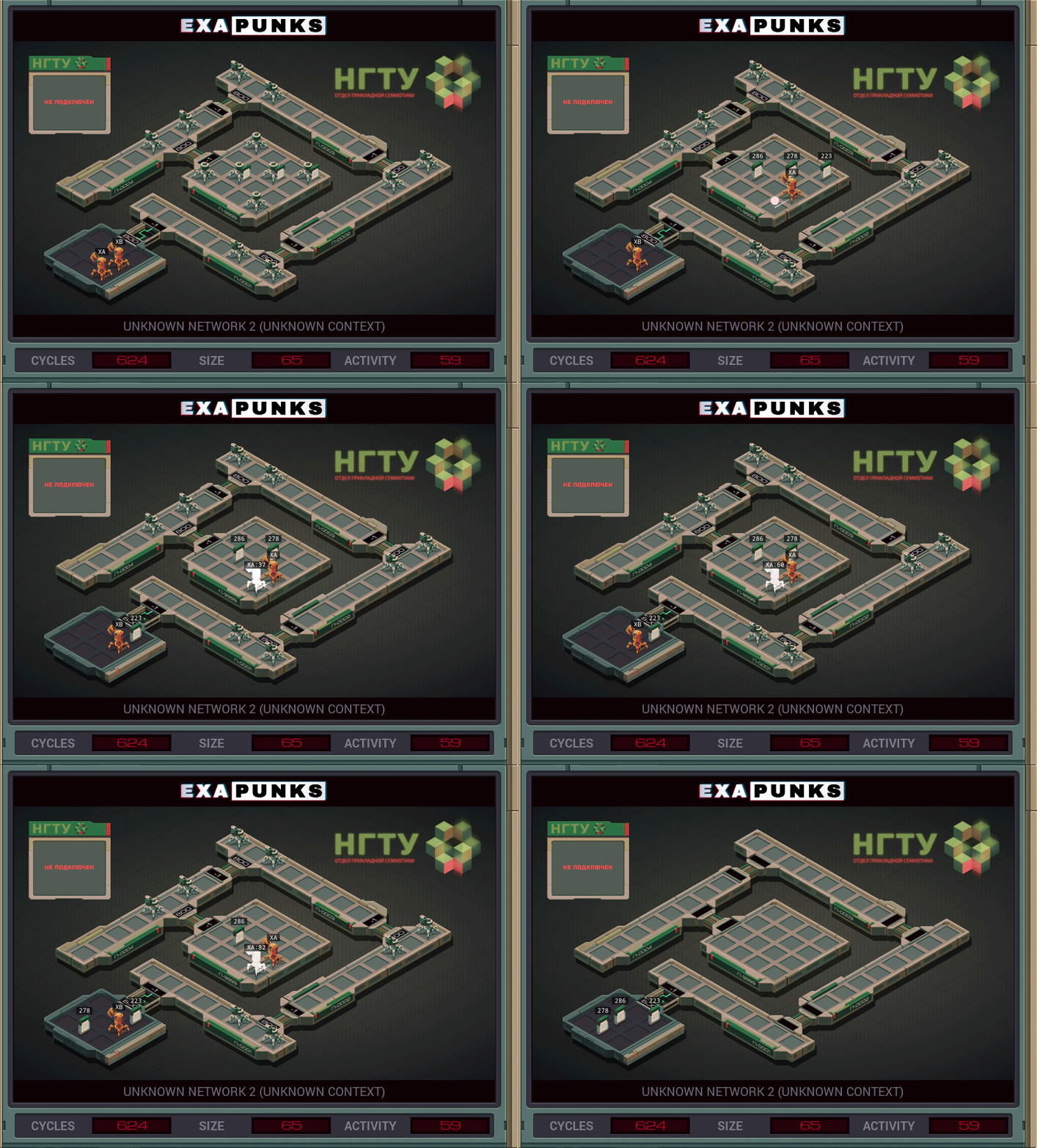
I love this programming game called EXAPUNKS by Zachtronics. But I despised handwriting assembly code, so I made a high level programming language that compiles down to the game's assembly language, and solved all of the puzzles using my language.
xa {
  link 800
  loop {
    spawn { link 2 }
          { link 3 }
          { link 5 }
          { link 7 }
          { link 11 }
          { link 13 }
  }
}
LINK 800
MARK LO_ST_0ZC1H
REPL SP_ST_0_8VRZP
REPL SP_ST_1_8VRZP
REPL SP_ST_2_8VRZP
REPL SP_ST_3_8VRZP
REPL SP_ST_4_8VRZP
REPL SP_ST_5_8VRZP
JUMP SP_EN_8VRZP
MARK SP_ST_0_8VRZP
LINK 2
JUMP SP_EN_8VRZP
MARK SP_ST_1_8VRZP
LINK 3
JUMP SP_EN_8VRZP
MARK SP_ST_2_8VRZP
LINK 5
JUMP SP_EN_8VRZP
MARK SP_ST_3_8VRZP
LINK 7
JUMP SP_EN_8VRZP
MARK SP_ST_4_8VRZP
LINK 11
JUMP SP_EN_8VRZP
MARK SP_ST_5_8VRZP
LINK 13
JUMP SP_EN_8VRZP
MARK SP_EN_8VRZP
JUMP LO_ST_0ZC1H
MARK LO_ED_0ZC1H
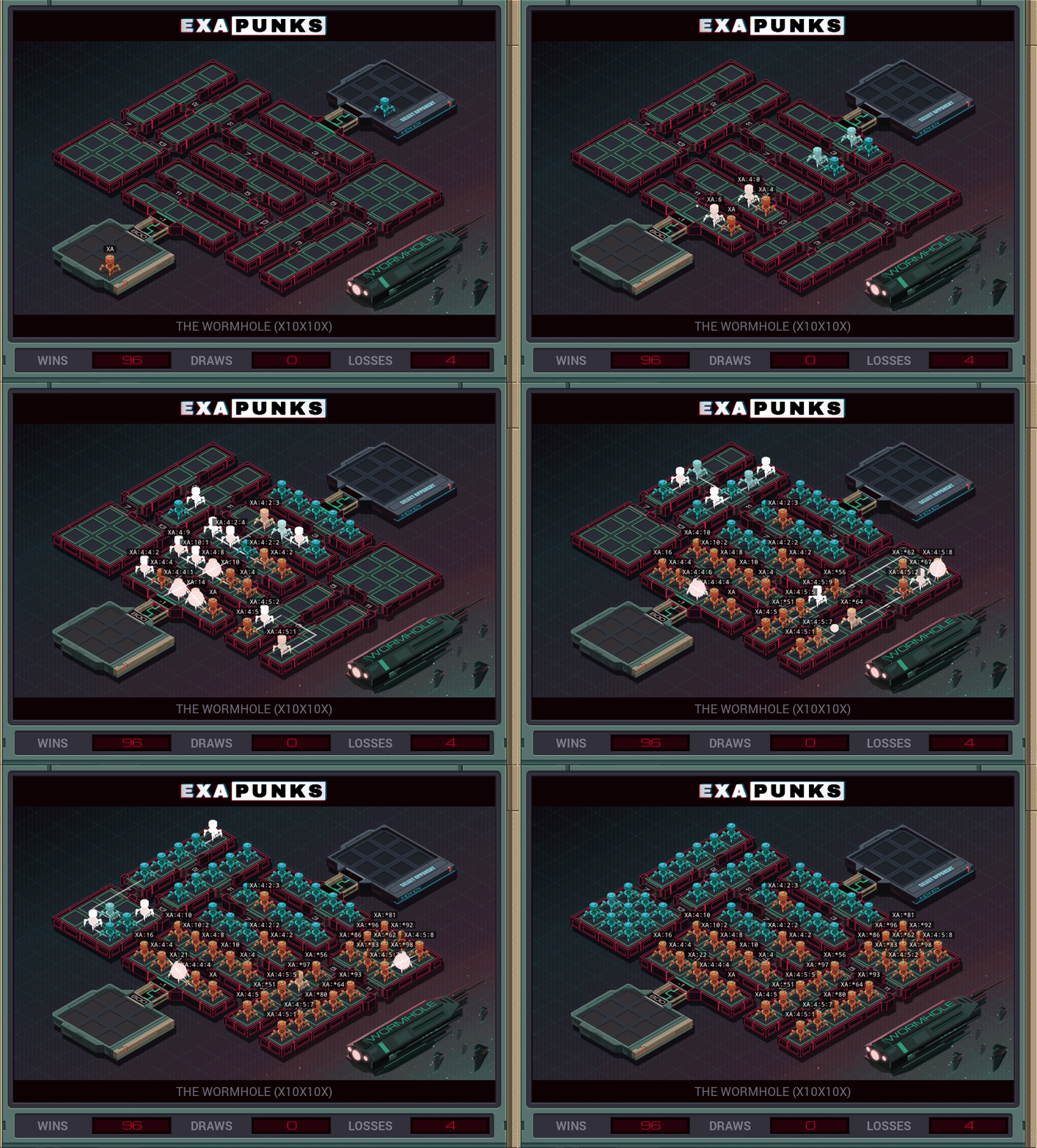
xa {
  loop {
    spawn {
     loop {
      link 800
      #ctrl = 420
     }
    }
  }
}

xb {
  link 800, -1
  loop { #ctrl = 420 }
}
MARK LO_ST_U3ZWB
REPL SP_ST_0_TU32B
JUMP SP_EN_TU32B
MARK SP_ST_0_TU32B
MARK LO_ST_01AD2
LINK 800
COPY 420 #CTRL
JUMP LO_ST_01AD2
MARK LO_ED_01AD2
JUMP SP_EN_TU32B
MARK SP_EN_TU32B
JUMP LO_ST_U3ZWB
MARK LO_ED_U3ZWB
LINK 800
LINK -1
MARK LO_ST_HTIS8
COPY 420 #CTRL
JUMP LO_ST_HTIS8
MARK LO_ED_HTIS8
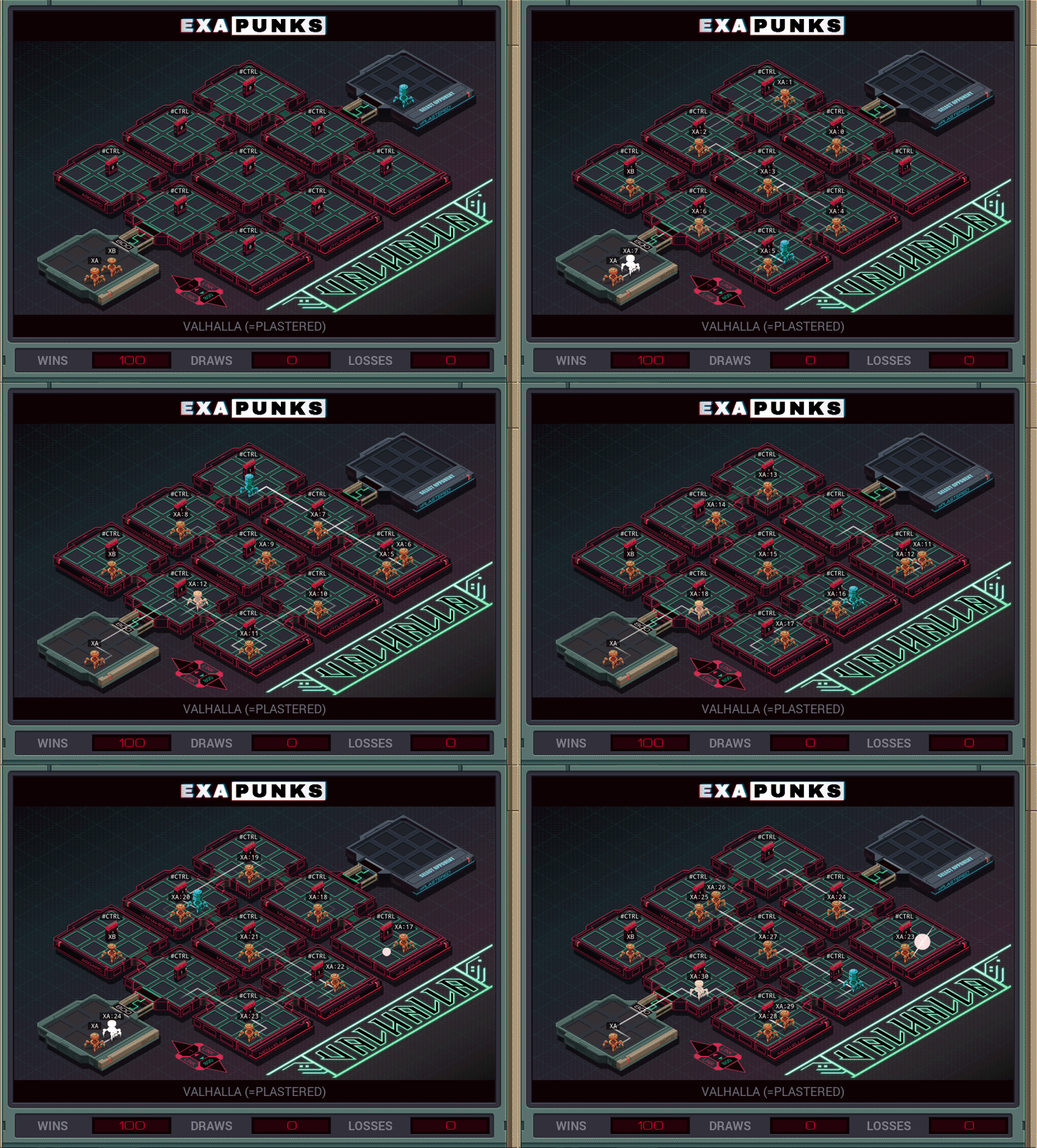
xa {
  link 800, 800, 800, 800, 800
  %repeat(6) { kill }
  file_id/x = 200
  while (file_id/x < 300) {
    spawn {
      fopen(file_id/x) {
        link -1, -1, -1, -1, -1
      }
      HALT
    }
    file_id/x += 1
  }
  $ch = 1337
}

xb {
  chignore()
  spawn {
    link 800, 800, 800, 800
    kill
    kill
  } {
    link 800, 800, 800
    kill
    kill
  } {
    link 800, 800
    kill
    kill
  } {
    link 800
    kill
    kill
  }
}
LINK 800
LINK 800
LINK 800
LINK 800
LINK 800
KILL
KILL
KILL
KILL
KILL
KILL
COPY 200 X
MARK WH_ST_OPM51
TEST X < 300
FJMP WH_EN_OPM51
REPL SP_ST_0_TUOOO
JUMP SP_EN_TUOOO
MARK SP_ST_0_TUOOO
GRAB X
LINK -1
LINK -1
LINK -1
LINK -1
LINK -1
DROP
HALT
JUMP SP_EN_TUOOO
MARK SP_EN_TUOOO
ADDI X 1 X
JUMP WH_ST_OPM51
MARK WH_EN_OPM51
COPY 1337 M
VOID M
REPL SP_ST_0_U4D77
REPL SP_ST_1_U4D77
REPL SP_ST_2_U4D77
REPL SP_ST_3_U4D77
JUMP SP_EN_U4D77
MARK SP_ST_0_U4D77
LINK 800
LINK 800
LINK 800
LINK 800
KILL
KILL
JUMP SP_EN_U4D77
MARK SP_ST_1_U4D77
LINK 800
LINK 800
LINK 800
KILL
KILL
JUMP SP_EN_U4D77
MARK SP_ST_2_U4D77
LINK 800
LINK 800
KILL
KILL
JUMP SP_EN_U4D77
MARK SP_ST_3_U4D77
LINK 800
KILL
KILL
JUMP SP_EN_U4D77
MARK SP_EN_U4D77
spawn create an EXA
link move between hosts
name/x a name for register X
$ch send or receive a message
#ctrl a host’s hardware register
%repeat repeat code at compile time
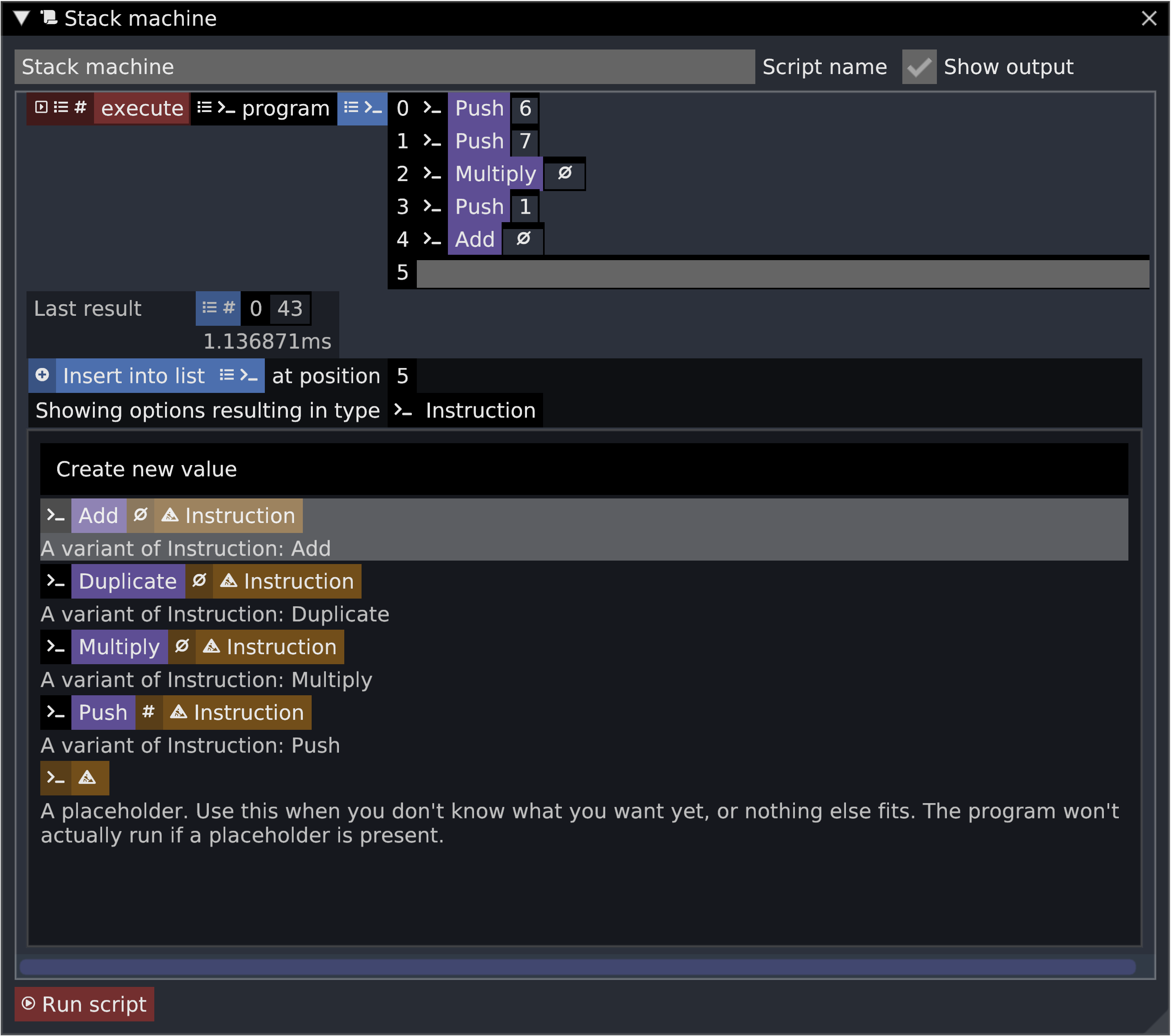
A programming language where programs can edit their own comments. Designed and implemented in 48 hours, and won🥇in the langjam 0001 competition.
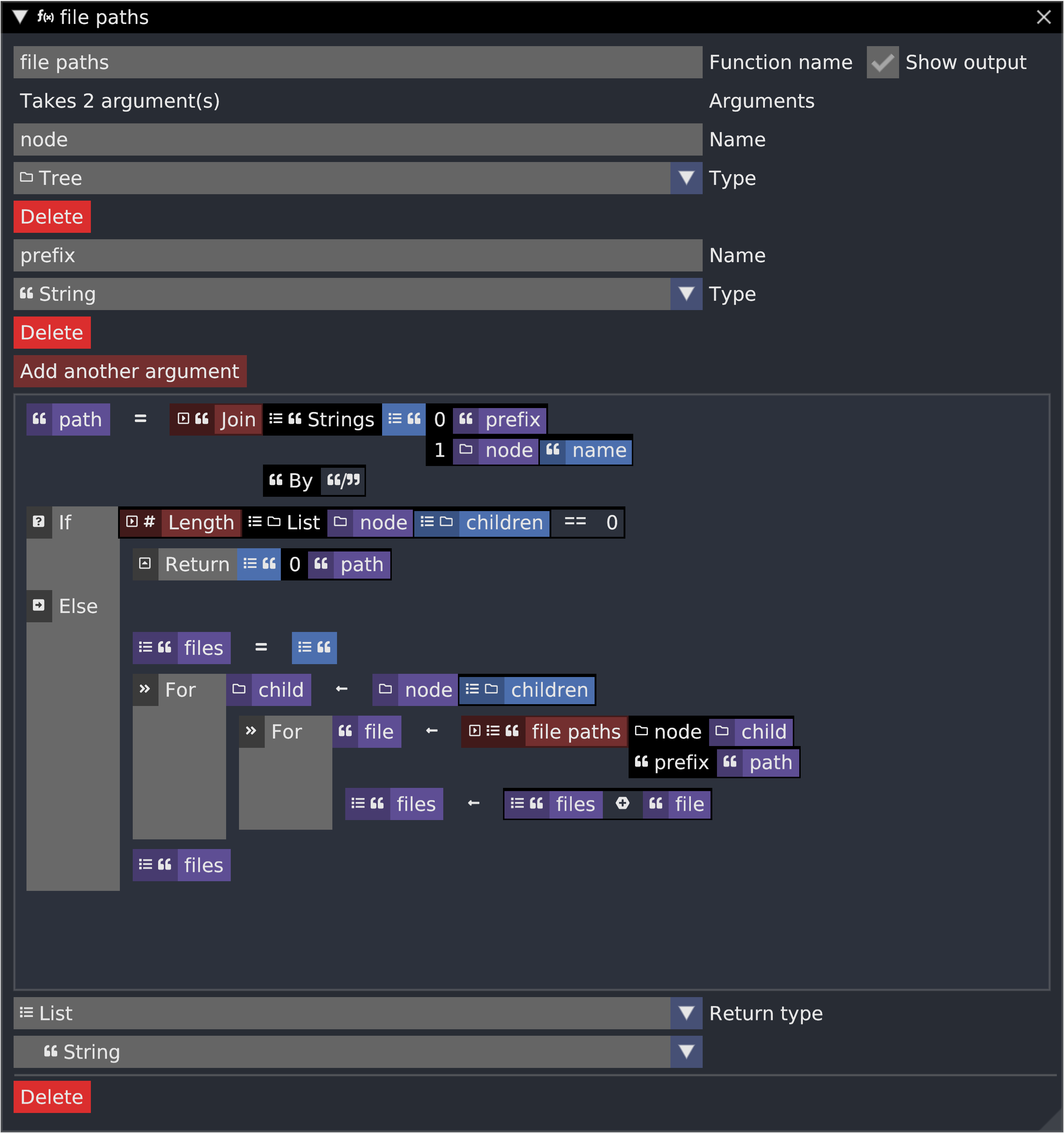
CodeMaestro explored programming as direct manipulation of structured code rather than editing plain text.
Resizes your active window using the golden ratio, an addon for bspwm, a tiling window manager for Linux. Inspired by golden-ratio.el